Missile Defense: X-Band Radar to Qatar (July 18, 2012)

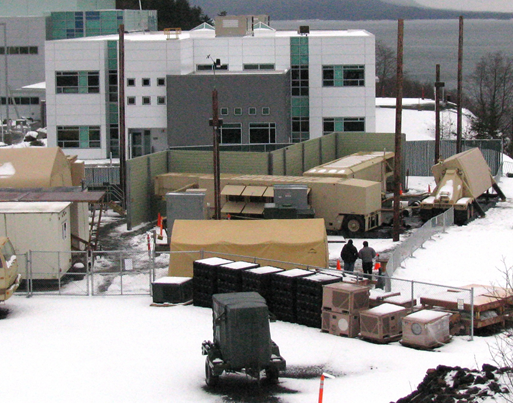
The Wall Street Journal reported yesterday that an AN/TPY-2 X-band radar was being deployed to Qatar.[1]  This is apparently the same radar as the one that the Missile Defense Agency’s August 2011 Program Update said would be deployed to the North Arabian Gulf by the end of 2011.[2]


An AN/TPY-2 radar temporarily deployed near Juneau Alaska for a missile defense test.  The radar antenna is at far right.  The two similarly colored units adjacent to it are for cooling and  electronics.  (Photo source: Missile Defense Agency)

Read the full post »

Missile Defense: Can the Precision Tracking Space System Discriminate? (July 17, 2012)

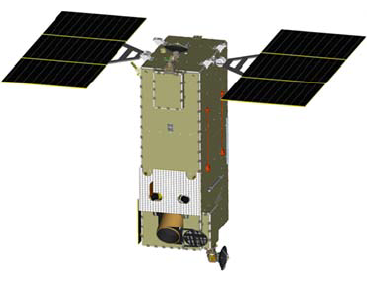
The Precision Tracking Space System (PTSS) is, according to recent testimony by Missile Defense Agency (MDA) Director Lt. General Patrick O’Reilly, the greatest potential future enhancement for both homeland and regional defense in the next ten years.[1] PTSS is a system of satellites intended to track ballistic missiles using an infrared telescope with sufficient accuracy to be able to guide interceptors.  The PTSS program was formally initiated last year as a replacement for the Space Tracking and Surveillance System (STSS) which was the latest in a long line of proposed space-based missile tracking systems dating back to at least the late 1980s.  Two STSS “demonstration” satellites were launched in 2009, and the MDA recently noted that they had reached their 1,000th day in orbit and were still operational.[2]


PTSS Satellite (image from MDA factsheet)[3]

Read the full post »

Space Surveillance Sensors: Millimeter Wave (MMW) Radar (June 19, 2012)

Millimeter Wave (MMW) Radar

The Millimeter Wave (MMW) radar is a Ka-band (35 GHz) and possibly W-Band (95 GHz) imaging radar at the Kwajalein Atoll on the Pacific. It is a collateral sensor in the Space Surveillance Network (SSN).  It has recently been upgraded to a 4 GHz bandwidth, giving it a range resolution of about six centimeters.  It is currently the highest resolution imaging radar in the SSN (although it will be surpassed by the W-band upgrade to the Haystack radar when this becomes operational, likely in 2013).   


Photograph from: http://www.ll.mit.edu/publications/MITLL_2011_annual_report.pdf

Read the full post »

Ballistic Missile Defense: Aegis BMD Testing “Unexpected Energetic Event” (June 10, 2012)

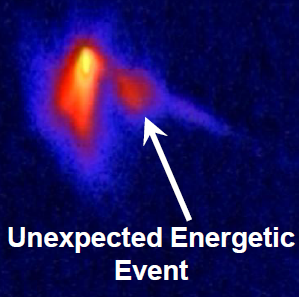
More information has recently become available on the “Unexpected Energetic Event” that was apparently responsible for the failure of the first SM-3 Block IB intercept attempt (FTM-16) in September 2011.  The cause was a failure in the SM-3 interceptor’s third rocket stage motor.    Despite assurances that this component, which is common to both the IA and IB variants of the SM-3 interceptor, had performed successfully many times previously, it also apparently experienced an “anomaly” in its previous test (FTM-15, April 14, 2011, of an SM-3 IA) serious enough to temporarily halt deliveries of new interceptors.  In the most recent test, a May 2012 repeat of September’s failed intercept, the part of the third stage booster (the second pulse) that had failed previously was not used, and the interceptor hit its target.


 “Unexpected Energetic Event” during the FTM-16 intercept test, September 1, 2011.[1]

  Read the full post »

Ballistic Missile Defense: Power of X-Band Radars (June 4, 2012)

X-Band Radar Transmit/Receive (T/R) Modules

In order to estimate the capabilities of missile defense radars such as the AN/TPY-2s used both as Forward Based X-Band (FBX) radars and THAAD theater missile defense battery radars it is necessary to assess the power output of the radars.  There do not appear to be any public official numbers for the peak or average powers of these radars.  However, one can estimate these based on the peak and average powers of transmit/receive modules making up their antennas.  This post discusses and assesses these power outputs for the TPY-2 and other X-band missile defense radars (SBX, GBR-P).  In particular, it argues that the average power outputs of the modules are 6, 10 and 16 watts for the GBR-P, SBX, and TPY-2 radars respectively

Read the full post »

Space Surveillance Sensors: Globus II Radar (June 1, 2012)

Globus II

The Globus II is a large X-band dish radar located at Vardo in northern Norway (70.37˚ N, 31.13˚ E).  It is a dedicated sensor in the SSN and is used for tracking deep space objects, including objects in geosynchronous orbits, and for wide-band imaging of space objects.

The Globus II overlooking the town of Vardo (photograph from: http://barentsobserver.com/en/node/22234)

  Read the full post »

“Missile Defense. It’s Not a Game.” Actually, It Is. (May 28, 2012)

“MISSILE  DEFENSE. IT’S NOT A GAME” proclaims the front page of the “Careers” section of the Missile Defense Agency’s website. However, right below this pronouncement, you will indeed find a box inviting you  to:  MDA GAMES: CLICK HERE TO PLAY.

 

MDA’s Careers page.

Following the link takes you to the MDA’s game “The Interceptor,” which offers you the opportunity to “lead one of the greatest technological acheivements of our time.” ( I assume this refers to the missile defense system, not the game).  According to the company that produced the game, it was based on the old Atari “Missile Command” arcade game  and was aimed at “college students and recent graduates.”

 

The Interceptor


In order to win, you must get through four levels of play without letting a total of 40 missiles get through to the city you are defending.  Fortunately, the missiles are not nuclear-armed, as the city remains standing even after being hit by multiple missiles (although there are three large buildings in the foreground that do eventually fade away after enough hits).

My favorite feature of the game is that you can advance to the second level without destroying a single attacking missile.  (In fact, you don’t even have to fire a single interceptor to advance.)   If  you  remember Patriot in the 1991 Gulf War, you will appreciate this highly realistic feature.
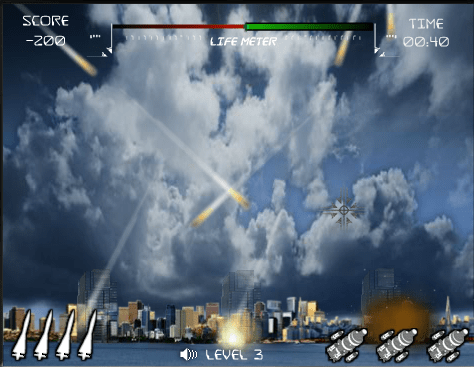


A missile attack underway.

Space Surveillance Sensors: Haystack LRIR (May 25, 2012)

Haystack LRIR

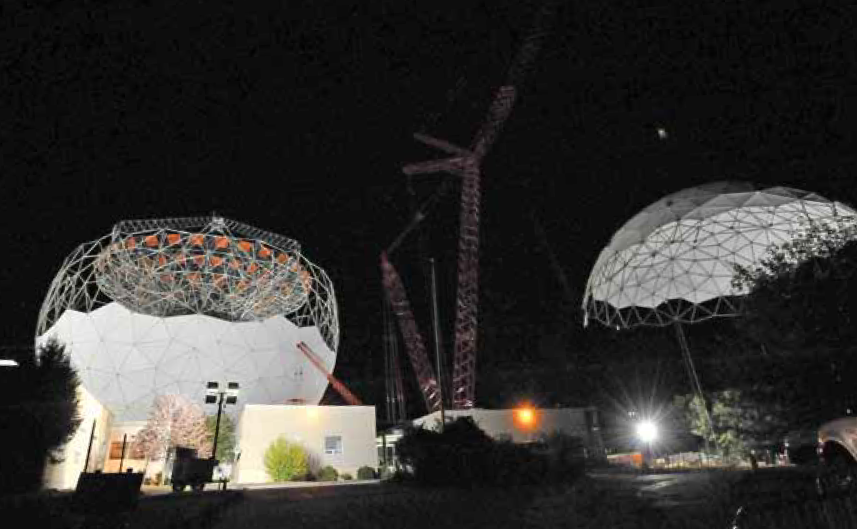
The Haystack radar is large dish radar at the Lincoln Space Surveillance Center near Boston, and a contributing sensor to the U.S. Space Surveillance Network.[1]  From 1978 until April 2010, when it was shut down for a major upgrade to add a W-Band capability (which will be discussed in a future post), Haystack operated part-time as the X-Band Long-Range Imaging Radar (LRIR).  The LRIR was reportedly the only U.S. radar capable of imaging satellites out to geosynchronous orbit range.  The upgrade involved installing a new antenna and was due to be completed by about 2013, after which the radar will be known as the Haystack Ultrawideband Space Imaging Radar (HUSIR).  Under the upgrade, the LRIR’s X-band capability will be retained and is expected to return to operation in 2012.

September 2010: The top portion of the Haystack’s radome about to be reinstalled after the installation of the new antenna.  Photograph from MIT Lincoln Laboratory, 2010 Annual Report, p. 13.[2]

Read the full post »

Ballistic Missile Defense: How Many GMD System Interceptors per Target? (May 23, 2012)


In March 2011, MDA Director Lt. Gen. Patrick O’Reilly told a House of Representatives hearing that “Today, 30 operational GBIs protect the United States against a medium ICBM raid size launched from current regional threats.”[1]  Leaving aside the fact the current Ground-Based Midcourse (GMD) system interceptors (GBIs) have never actually been tested against an ICBM target, this raises the question: How many attacking missiles comprise “a medium ICBM raid size” against the GMD system?  And this question then suggests the further question: How many GBI interceptors is the MDA planning to fire at each attacking missile?

This second question is particularly interesting in light of the recent MDA and DoD claims that they intended to modify already deploy GBI interceptors to “at least double” their effectiveness [see question 2 and its answer in May 21 post “A multiple choice quiz”].  This would seem to imply that the effectiveness of the current interceptors may not be too high.

Read the full post »

A multiple-choice quiz to test your knowledge about the GMD system (you may notice a trend in the answers). (May 21, 2012)

The Ground-Based Midcourse (GMD) national missile defense system is intended to protect U.S territory from long-range missile attack, such as from intercontinental ballistic missiles (ICBMs) that might be built in the future by North Korea or Iran.  The system now deploys 30 Ground-Based Interceptors (GBIs) in silos in Alaska and California.  The first GBI was deployed in July 2004 and the first intercept test of using an operationally-configured GBI (that is one that is nominally the same as the deployed interceptors) was in September 2006.

Here‘s a simple multiple-choice quiz to test your knowledge about the GMD system (you may notice a trend in the answers).  Bear in mind that over the last decade numerous U.S. officials have stated the GMD system is already highly effective (“ninety percent plus” according to the Missile Defense Agency’s current Director — see the post of  April 27 on Thirteen Claims about GMD Effectiveness for details).

 (1) How many (percent) of the GMD flight tests have revealed problems that required subsequent modifications to the GBI interceptors?

(a) 20%.

(b) 50%.

(c) 70%.

(d) Every one.

  Read the full post »