A central element of the debate surrounding the recent decision by South Korea to allow the United States to deploy a Terminal High Altitude Area Defense (THAAD) missile defense system on its territory is the range of the THAAD’s radar. China argues that the THAAD radar will be able to look deep into its territory; supporters of the deployment counter that the radar will be configured so that its range will be limited.
The radar used with a THAAD battery is the X-band AN/TPY-2. The TPY-2 radar has two configurations. It can be configured as Terminal Mode (TM) radar, in which it operates as the fire control radar for a THAAD battery. Alternatively, it can be set up as a Forward-Based Mode (FBM) radar, in which it relays tracking and discrimination data to a remote missile defense system, such as the U.S. Ground-Based Midcourse (GMD) system. If THAAD is deployed to South Korea, The United States has stated that its TPY-2 radar would be in the shorter-range TM configuration. Since in the TM mode, the radar reportedly only has a range of 600 km, supporters of the THAAD deployment argue that while its range is adequate to cover N. Korea, it cannot look deeply into China. Critics of this argument point out that in the FBM mode the radar has a much greater range, and that the radar can be converted from TM to FBM (or vice versa) in only eight hours or less. According to a U.S. Army manual, “The hardware used by the two modes is identical, but their controlling software, operating logic, and communications package are different.”[1] In addition the radar is highly mobile: it can be transported by air and can be operational with four hours of reaching its deployment site.

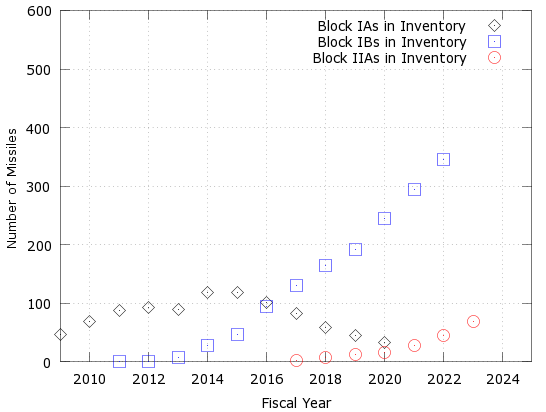
 Figure 1. Planned (the chart was made in 2013) deployments of BMD capable ships as of 2015. Chart from:
 mostlymissiledefense